How to Create a Stylish Outdoor Living Space
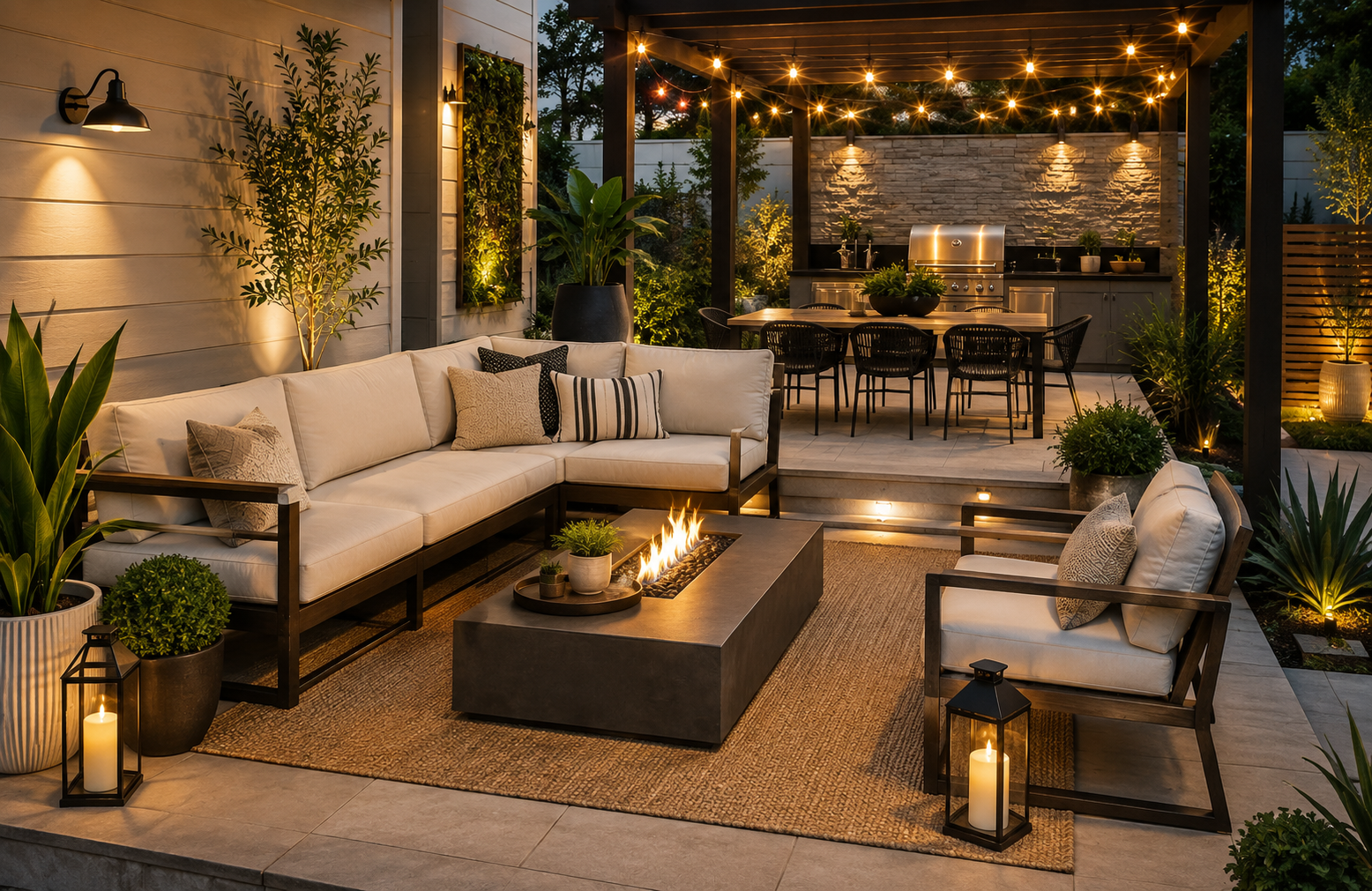
There’s something particularly satisfying about an outdoor area that actually gets used—where people linger after dinner, where morning coffee becomes a ritual rather than a rushed habit, and where guests naturally gravitate when the weather allows. That kind of space doesn’t happen by accident. It comes from treating the outdoors with the same thought you’d give to any room inside the home.
The good news is that creating a genuinely comfortable and attractive outdoor living space doesn’t require a complete garden redesign or a large budget. It requires thoughtful decisions about furniture, layout, shade, lighting, plants, privacy, and the materials that tie everything together. Get those elements right, and even a modest patio or small balcony can become one of the most-used areas of the home.
What works will depend on your specific situation. Available space, climate, how exposed the area is to sun or wind, the home’s existing architecture, how the household actually spends time outdoors, and what you’re realistically willing to maintain—all of these should shape your choices. This guide covers practical outdoor living space ideas for a range of spaces, budgets, and lifestyles.
1. Start by Defining How You Will Use the Space
Before you buy a single piece of furniture or choose a color scheme, spend some time thinking about what you actually want this outdoor space to do. The answer shapes almost every decision that follows.
An outdoor area designed primarily for relaxed morning coffee looks quite different from one designed for regular dinner parties. A patio used mainly by young children needs a different layout than one used primarily by adults for quiet evenings outdoors. A balcony where one person reads and unwinds has different requirements from a backyard where the whole family spends weekend afternoons.
Common primary purposes worth considering:
- Outdoor dining — A dedicated table and comfortable chairs, positioned close to the kitchen door for practical serving
- Relaxing and unwinding — Lounge seating, shade, and somewhere to set a drink or a book
- Entertaining guests — Flexible seating arrangements, enough surface space, and good lighting for evenings
- Family time and activities — Space to move around, durable furniture, and areas that can adapt to different uses
- A quiet retreat — A small seating area with some privacy, comfortable cushions, and perhaps a little greenery
- Working or reading outside — Comfortable seating with practical shade and minimal distractions
Most outdoor spaces serve more than one purpose, and that’s fine. But identifying the primary use first prevents you from buying furniture that doesn’t suit the way you actually live. A large dining table bought optimistically for regular hosting can dominate a small patio and leave little room for anything else if hosting only happens a few times a year.
2. Choose Outdoor Furniture Based on Space and Comfort
Outdoor furniture is one of the more significant investments in an outdoor living space, so it’s worth getting right. The two things that matter most are fit—does it suit the available space—and durability—will it hold up to the conditions where you live.
Sofas and lounge seating create a relaxed, living room feel outdoors. Deep-seated sofas with weather-resistant cushions work well on larger patios, decks, and porch areas. On a smaller balcony or terrace, a loveseat or two lounge chairs may be more proportional.
Dining sets range from bistro tables with two chairs to larger rectangular tables with six or more seats. Choose a size that suits your realistic everyday use, not just the maximum number of people you might occasionally host. A six-person table that’s too large for the patio will make the space feel cramped and awkward.
Benches offer flexible seating that can accommodate different numbers of people and often double as surfaces for plants or accessories. They’re practical in both large and small spaces.
Coffee tables and side tables give people somewhere to set drinks, books, and plates without balancing things on their laps. These are easy to overlook but make a noticeable difference to how usable the space actually feels.
Multifunctional pieces — Storage benches, ottomans that function as seating or footrests, and folding tables that expand for hosting are particularly practical in compact outdoor areas.
On durability and maintenance: different materials suit different climates and lifestyles. Powder-coated aluminium tends to be lightweight and resistant to rust, making it practical in wetter climates. Teak and other dense hardwoods weather well outdoors and develop a silver-grey patina over time, though they need occasional oiling if you want to maintain their original color. Woven synthetic rattan is popular for lounge furniture and generally resists UV and moisture better than natural rattan. Stone and concrete tables are highly durable but heavy and best suited to permanent locations. Whatever you choose, look for cushion fabrics specifically designed for outdoor use—they’re treated to resist moisture, fading, and mildew in ways that indoor fabrics aren’t.
3. Create a Functional Outdoor Layout
Arrangement matters as much as the furniture itself. An outdoor space where the furniture is crowded together or positioned without much thought tends to feel uncomfortable and hard to navigate, even if the individual pieces are attractive.
The basic principle is the same as indoor room planning: create areas with a clear purpose, keep pathways clear, and arrange seating so it encourages conversation and feels comfortable to use.
Conversation areas work best when seating is positioned facing each other or in an L or U shape, close enough for easy conversation but with enough room to stand up and move without stepping over furniture.
Dining zones need enough clearance around the table for chairs to be pulled out easily. A rough guide is to allow around a metre of clear space around the perimeter of the table, though this depends on the layout of the space.
Relaxation areas benefit from being positioned in a corner or against a wall or fence, which gives the seating a sense of enclosure without feeling fully enclosed.
Cooking or serving areas — If you use an outdoor grill or a serving table regularly, it should be positioned for practical access without requiring guests to navigate through the seating area to reach food and drinks.
Clear circulation — It should be easy to walk between the indoor and outdoor areas without squeezing past furniture, and movement around the space should feel natural. If you’re unsure, physically walk through the arrangement before finalizing it.
Avoid the temptation to fill every corner of an outdoor space with furniture. A degree of open space makes the area feel more comfortable and less cluttered.
4. Add Shade for Better Comfort
An outdoor living space without shade is simply uncomfortable in many climates for much of the year. Shade is one of the most practical improvements you can make, and it’s often what determines whether a patio or deck actually gets used during the warmest parts of the day.
Freestanding umbrellas are the most flexible shade solution and one of the most cost-effective. They can be repositioned as the sun moves and stored away when not needed. Large umbrellas with a wide canopy tend to provide more useful coverage than smaller ones, but the base needs to be heavy and stable—an umbrella that blows over in a moderate breeze is a genuine hazard.
Pergolas define an outdoor living area and provide partial shade from climbing plants or adjustable slat systems. A pergola with angled or louvred slats that can be adjusted throughout the day offers more flexibility than a fixed overhead structure. Pergolas suit larger patios and backyard spaces better than compact balconies, and installation complexity varies considerably—some can be assembled without professional help, while others require structural consideration. Seek professional advice for anything that needs to be fixed to the building.
Covered patios and verandas provide permanent, all-weather shade and are a long-term outdoor home improvement for houses where outdoor living is a priority. If you’re considering adding or extending a covered structure, consult a qualified professional to ensure it meets any relevant planning or building requirements in your area.
Shade sails are a relatively affordable option for covering a larger area and can be rigged between posts or between a building and a post. They’re effective for sun protection but typically don’t offer rain coverage.
Outdoor curtains on a pergola or covered structure can provide adjustable shade and a degree of privacy, and they also add softness to what can otherwise be a fairly minimal structure. Use fabrics specifically rated for outdoor conditions.
Shade requirements depend on your climate and the orientation of your outdoor space. A north-facing terrace in a mild climate may need very little shade intervention, while a west-facing patio in a hotter region might be essentially unusable on summer afternoons without it.
5. Improve Outdoor Lighting
The right lighting extends the usable hours of an outdoor space considerably. A patio that’s pleasant in the afternoon but unusable after dark—because there’s no light or the only option is a single harsh overhead fixture—loses half its potential.
Ambient lighting creates the overall level of illumination in the space. Outdoor wall lights, post lights, or overhead fixtures provide this. The goal is enough light to see clearly and move safely without creating a brightness that feels unpleasant or intrusive.
String lights remain one of the most effective ways to add atmosphere to an outdoor space. Hung between posts, across a pergola, or along a fence line, they create warm, even light that feels inviting. Look for lights rated for outdoor use with weather-resistant fittings.
Pathway and step lighting are a safety consideration as much as an aesthetic one. Illuminating steps, level changes, and pathways reduces the risk of trips and falls and makes the space feel more complete after dark.
Lantern-style fixtures on a table, a wall, or a low surface add warmth and decorative interest. Battery-powered or solar lanterns require no electrical installation and work well in areas where running cable is impractical.
Accent lighting can highlight a plant, a feature wall, or an architectural element and adds depth to the overall appearance of the space in the evening.
Dining area lighting should be sufficient for people to see their food and each other comfortably. A pendant light over an outdoor dining table works well on a covered patio; for uncovered areas, a combination of nearby wall lights and table lanterns can achieve a similar effect.
Any permanent outdoor electrical installation—new circuits, hard-wired fixtures, exterior sockets—should be carried out by a qualified electrician. Outdoor electrical work has specific safety requirements, and this isn’t an area to approach as a straightforward DIY project.
6. Use Plants to Add Color and Privacy
Plants are one of the most effective tools for making an outdoor space feel genuinely pleasant. They add color, soften the visual transition between built surfaces and the natural environment, and can provide shade, privacy, or fragrance depending on the species.
Potted plants and container gardens are practical in almost any outdoor space, from a compact balcony to a large terrace. Containers allow you to move plants around, change them seasonally, and grow things that might not survive in the existing soil conditions.
Shrubs and larger container plants can provide structure and a degree of privacy when positioned thoughtfully around the perimeter of a seating area. Tall, columnar plants work particularly well in narrow spaces where a wider spreading plant would take up too much room.
Flowering plants add seasonal color without requiring major landscaping work. Grouping containers of different heights creates a more layered, natural look than a single row of identical pots.
Climbing plants on a trellis or pergola can provide a combination of shade, privacy, and visual interest over time. Wisteria, jasmine, climbing roses, and similar plants work well in temperate climates, but plant selection should always be based on what actually grows well in your region.
Vertical planters and wall-mounted planting systems use vertical space rather than floor area—useful in balconies and small patios where floor space is limited.
Plant selection should be realistic about climate, sunlight, and how much time you’re prepared to spend on maintenance. A beautiful planting scheme that requires daily watering and regular pruning may not suit a busy household. Hardy, lower-maintenance plants that suit your specific climate will almost always look better in practice than higher-maintenance alternatives that struggle in your conditions.
7. Add Privacy Without Making the Space Feel Closed In
Privacy is one of the things people mention most when describing what they want from an outdoor space. Without it, it can be difficult to fully relax—particularly in gardens or terraces that are overlooked by neighboring properties or visible from a street.
The challenge is adding meaningful privacy without creating something that feels oppressive or that blocks natural light and air movement.
Plants are the softest and most natural-looking privacy solution. A row of tall shrubs, a line of columnar trees, or a mix of evergreen plants along a boundary can screen sight lines effectively without creating the solid visual weight of a fence or wall. This approach takes time—plants need to establish and grow—but the result tends to complement the surrounding landscape better than any built structure.
Privacy screens made from timber, metal, or composite materials offer a more immediate solution and can provide partial or full screening depending on the design. Slatted screens that allow light and air through while blocking direct sight lines are generally more comfortable to sit beside than solid panels.
Outdoor curtains on a pergola or attached to a wall-mounted rail offer flexible privacy that can be drawn when needed and opened when not. This approach works particularly well for spaces that are only occasionally overlooked.
Fencing can provide complete screening where necessary, but the appropriateness of additional fencing will depend on planning considerations, the existing boundary situation, and how it will appear from both sides. If you’re considering significant boundary changes, check what’s permitted in your area.
Overhead elements on a pergola or covered structure can limit views from directly above, which is occasionally relevant in terraced or elevated locations.
Privacy solutions should feel like part of the overall design rather than an afterthought. A privacy screen that looks out of place with the rest of the space, or planting that blocks a pleasant view while failing to screen the actual problem, won’t feel satisfying to use. Consider the specific lines of sight you need to address before choosing a solution.
8. Choose a Cohesive Outdoor Color Palette
One of the clearest differences between an outdoor space that looks intentional and one that looks assembled from unrelated pieces is color. That doesn’t mean everything needs to match precisely, but having a loose palette that repeats across furniture, cushions, accessories, and plants creates visual coherence.
The process is similar to how you’d approach a room inside the home. Choose a primary color, a secondary or complementary color, and a neutral that ties the two together. The furniture itself is often the neutral—a natural wood, a grey, or a black frame—which gives you more freedom with cushions, rugs, and accessories.
Exterior walls and surfaces are fixed and should be the starting point. If your outdoor area is bounded by red brick, warm terracotta tones or deep greens in the planting and soft furnishings will generally read more coherently than cool blues and greys.
Cushions and soft furnishings are the easiest and least expensive part of the palette to change, which makes them a practical way to introduce and test colors before committing to larger pieces.
Planters in a consistent color or material family tie the planting into the rest of the scheme without requiring matching plants.
Accessories—candle holders, outdoor lanterns, side tables, ornaments—can carry an accent color without dominating the space.
There’s no universal palette that works for every outdoor space. Climate, the home’s architectural style, surrounding landscape, and personal preference all influence what looks right. Spaces with lots of natural timber often suit warmer tones, while modern properties with clean lines frequently look well with cooler, more restrained palettes. The important thing is internal consistency—repeating colors intentionally rather than accumulating pieces in whatever shade happened to be available.
9. Add an Outdoor Rug
An outdoor rug does something useful in a way that’s easy to underestimate: it visually anchors a seating or dining arrangement, defining the area in the same way a rug defines a living room. Without one, furniture can look as though it’s been placed randomly on a hard surface.
Size is the most important consideration. A rug that’s too small will make the furniture look as though it’s floating around the edges of it. As a general rule, all the main pieces of furniture in a seating arrangement should either sit fully on the rug or have at least their front legs on it. For a dining area, the rug should be large enough that the chairs remain on it when pushed back from the table.
Weather resistance — An outdoor rug should be made from materials designed to tolerate moisture, UV exposure, and general outdoor conditions. Polypropylene and other synthetic flat-weave materials are commonly used and generally clean easily with a hose. Check that whatever you choose can drain and dry properly; a rug that stays wet underneath for days can damage the surface beneath it and develop mould.
Color and pattern — A rug is an opportunity to introduce a pattern or a stronger color into the scheme without committing a large piece of furniture to it. Geometric patterns tend to suit modern outdoor spaces; more naturalistic patterns work well in garden settings.
Practical placement — Consider whether the rug will be a trip hazard, particularly if it covers a change in surface texture or is placed near steps. Rug grippers or adhesive mats can help keep it from shifting on smooth surfaces.
10. Create a Comfortable Outdoor Dining Area
Outdoor dining is one of the most reliably enjoyable ways to use an outdoor space, and it doesn’t require elaborate equipment or a large area. A table, chairs that are comfortable enough to linger in, adequate light, and reasonable shade or shelter are the main ingredients.
Table size should suit the number of people who typically use it, not the maximum number it could theoretically accommodate. A table sized for four that extends to six for occasional hosting is more practical in most situations than a fixed eight-person table that dominates the space daily.
Seating comfort matters more outdoors than it sometimes seems. Dining chairs without cushions can become uncomfortable after an hour, particularly on hard surfaces. Cushioned seats, or chairs with enough natural ergonomic support, make extended outdoor dining much more pleasant.
Lighting over the dining area is important for evening use. A pendant hung from a pergola, string lights overhead, or well-positioned wall lights near the table all work. The light should be warm and positioned so it illuminates the table without shining directly into anyone’s eyes.
Shade is particularly important for daytime dining in warmer climates. A large umbrella centered on the table, or a pergola with a shade sail or climbing plants overhead, makes midday and afternoon dining viable when it otherwise wouldn’t be.
Access from the house — Position the dining table near the door leading to the kitchen or food preparation area if at all possible. The practical inconvenience of carrying dishes across a large garden to a distant dining table is easily underestimated and tends to discourage use.
11. Make a Small Outdoor Space Feel Larger
Small outdoor spaces—compact balconies, narrow side passages, small urban patios—have their own particular challenges. The instinct is often to maximize every inch with furniture and accessories, but this approach usually makes the space feel more cramped rather than more functional.
Small spaces benefit most from restraint and careful planning. A few well-chosen pieces in appropriate proportions almost always work better than a crowded collection of smaller items.
Slim and appropriately scaled furniture — Bistro chairs, folding tables, and slim lounge chairs take up less visual and physical space than their larger equivalents. Furniture with visible legs creates a lighter appearance than pieces that sit heavily on the ground.
Multifunctional pieces — A storage bench that seats two, a table that folds away when not needed, or an ottoman that functions as seating and a footrest reduces the number of separate items needed.
Vertical planting — Using wall space for planting rather than floor space keeps the floor area clear while adding greenery and life to the space.
Clear pathways — Even in a small space, ensuring there’s a clear route through or around the area prevents it from feeling like an obstacle course.
Light colors — Pale floor surfaces, light-colored furniture, and lighter wall colors tend to read as more spacious than darker alternatives. This isn’t a rule that applies in every case, but it’s a useful starting consideration.
Mirrors — An outdoor-rated mirror on a wall or fence can reflect light and create the impression of more space. This works best in enclosed spaces that don’t have a natural view, and the mirror should be positioned thoughtfully—ideally to reflect plants or sky rather than seating or fencing.
12. Make a Large Outdoor Space Feel More Inviting
A large outdoor area with furniture pushed to the edges and a vast expanse of open surface in the middle tends to feel uninviting rather than impressive. The challenge with a larger space is giving it warmth and a sense of purpose rather than simply filling it with furniture.
The most effective approach is to divide a large space into distinct zones, each with its own identity and purpose.
A lounge or conversation area — A grouping of sofas and chairs around a coffee table or low surface creates a destination within the larger space, somewhere with a clear invitation to sit.
A dining zone — Positioned near access to the house and defined by its own rug or pergola structure, the dining area becomes a separate room within the space.
A fire feature area — Where appropriate for your location and climate, a fire pit or an outdoor fireplace creates a gathering point for cooler evenings. If you’re considering any kind of fire feature, check relevant safety and local guidelines. Positioning, safety clearances, and surface materials are important considerations.
A garden or planted area — Dedicated planted zones add color and texture, and they help define boundaries within the larger space without the need for hard structures.
An outdoor kitchen or serving area — If you grill regularly, a dedicated area for the grill, preparation surface, and associated equipment keeps this activity separate from the seating and keeps the living zones free of cooking clutter.
Rugs, lighting, and furniture groupings are the main tools for visually connecting these zones. Consistent materials and a coherent color palette running through the different areas also help the space feel unified rather than disjointed.
13. Add Comfortable Textiles and Accessories
Textiles are where an outdoor space starts to feel genuinely comfortable rather than merely functional. Cushions, throws, and rugs soften hard furniture surfaces and introduce color and texture that brings the space to life.
Cushions make chairs and sofas comfortable enough to spend real time in. Look for cushion covers made from solution-dyed acrylic or similar outdoor fabrics that can tolerate sun, rain, and general outdoor exposure. These tend to retain their color longer than regular fabric and can usually be wiped clean or washed.
Throws for cooler evenings extend the usable hours of an outdoor space in temperate climates and add warmth and texture even when they’re not being used. Choose materials that don’t hold moisture or take excessively long to dry if they get damp.
Decorative pillows add layering to a sofa or chair arrangement. Keep the number manageable—too many pillows on outdoor furniture start to look fussy and are inconvenient to move every time someone wants to sit.
Planters as accessories — Well-chosen planters in consistent materials or colors contribute to the overall scheme even when empty, and they provide flexibility to change the planting seasonally.
Outdoor-appropriate artwork and decorative objects — Weather-resistant wall art, sculptural elements, or ornamental pieces can add personality to an outdoor space. Choose materials that are genuinely designed for outdoor exposure.
The key principle across all textiles and accessories is that what looks good in an indoor showroom may not hold up outdoors. Materials should be chosen for the specific conditions they’ll experience—sun, rain, moisture, temperature changes—rather than appearance alone.
14. Incorporate Natural Materials
Natural materials tend to work well in outdoor spaces because they connect visually and texturally to the surrounding environment in ways that synthetic materials don’t always replicate.
Timber — Whether it’s decking, timber furniture, raised planters, or pergola structures, wood brings warmth and a sense of craftsmanship to an outdoor space. Different species weather differently; some are significantly more durable outdoors than others. Timber that’s used outdoors should be appropriate for the purpose and maintained according to the manufacturer’s guidance.
Stone — Natural stone paving, stone-effect tiles, and stone-topped outdoor tables feel grounded and permanent. Stone surfaces are generally practical outdoors and handle weather well, though some are more porous than others.
Woven materials — Natural wicker, rope, and other woven textures add visual lightness and a relaxed feel. In wetter climates, synthetic woven alternatives designed for outdoor use tend to be more durable, but the visual effect is similar.
Terracotta — Terracotta planters, tiles, and decorative elements suit warmer climates and architectural styles particularly well, and they age attractively outdoors.
Natural-finish metals — Weathering steel, raw aluminium, and similar materials develop patina over time and often suit outdoor spaces with a more contemporary or industrial character.
Mixing two or three natural materials tends to create more visual interest than a single material used throughout, as long as they share some cohesion in tone or texture. Too many competing materials can start to look restless.
15. Design for Different Weather Conditions
The conditions your outdoor space will actually be used in should influence almost every decision you make about materials, furniture, shade, and accessories. A patio in a mild, dry climate has quite different requirements from a terrace in a wet, windy coastal location.
Sun exposure — In climates with intense sun, shade is essential rather than optional, and furniture fabrics should be UV resistant. Pale-colored surfaces reflect heat better than dark ones.
Rain — In wetter climates, furniture and materials should handle moisture without deteriorating quickly, and having practical cushion storage is important. Covered seating areas extend outdoor living considerably in regions with frequent rainfall.
Wind — An outdoor space in a windy location needs heavier furniture less prone to shifting, stable shade structures rather than lightweight freestanding umbrellas, and plants chosen for their tolerance of wind exposure.
Heat — Comfortable outdoor living in hot climates depends significantly on shade, airflow, and surfaces that don’t become uncomfortably hot underfoot or when touched. Dark surfaces—dark stone, dark metal furniture—absorb significantly more heat than lighter alternatives in full sun.
Cold — Outdoor spaces in cooler climates can still be functional for much of the year with appropriate furniture, a heat source such as a patio heater, throws, and perhaps a covered area. Furniture and materials should tolerate temperature variation and seasonal exposure.
Humidity — In humid conditions, materials that hold moisture or are vulnerable to mould and mildew—certain textiles, untreated timber—need careful selection and maintenance.
Be realistic about the conditions your outdoor space experiences, and let that guide your choices rather than buying what looks most appealing in a catalogue image taken in ideal conditions.
16. Create an Outdoor Space for Entertaining
An outdoor space that works well for entertaining doesn’t need to be lavish. What it does need is enough comfortable seating for the people you typically host, practical surface space, reasonable lighting for evening use, and an arrangement that makes moving between groups easy.
The design considerations that make an outdoor space feel comfortable for entertaining reflect broader principles of good outdoor design, and if you want to read about how these ideas connect to the rest of your home’s design, Best Home Improvement Ideas for a Cozy Home is worth exploring.
Flexible seating — A mix of sofas, chairs, benches, and stools allows seating arrangements to be adapted depending on group size and activity. Movable pieces are more versatile than fixed layouts.
Surface space — Guests need somewhere to set drinks and plates. Side tables, a low central table, or a serving console alongside the seating area prevents people from holding drinks for hours or setting them on the floor.
Outdoor serving areas — A side table or console near the dining zone works as a serving station without requiring constant trips indoors. This doesn’t need to be a full outdoor kitchen; a simple surface near the grill or near the dining area is often enough.
Easy movement between indoor and outdoor — Entertaining flows better when the indoor-outdoor transition is easy and unobstructed. Furniture placed too close to the back door, or steps without lighting, creates unnecessary friction.
Lighting for the evening — Comfortable evening entertaining needs ambient light, some warmth from lanterns or candles, and enough light over the dining or serving areas to be practical.
17. Outdoor Living Ideas for Different Budgets
An outdoor living space can be genuinely improved at almost any budget level. What changes is the scale and permanence of the improvements, not necessarily the overall result.
Low Budget
Meaningful improvement is possible without significant spending:
- Rearrange existing furniture — A fresh arrangement that creates a clearer seating zone or improves circulation can transform the feel of a space without spending anything.
- Add plants — Even a few well-chosen container plants introduce color and life. Start with a few species that suit your climate and grow from there.
- Introduce outdoor cushions — A set of weather-resistant cushions can make existing hard seating comfortable and add color to an otherwise dull arrangement.
- Add an outdoor rug — A single rug that grounds the seating area gives even a basic furniture arrangement more visual intention.
- Simple lighting improvements — Solar-powered string lights or battery lanterns require no installation and immediately extend the usable hours of the space.
- Tidy and simplify — Removing items that don’t belong in the outdoor space, clearing unnecessary objects from surfaces, and creating visual breathing room costs nothing.
Moderate Budget
At a moderate budget level, more substantial improvements become practical:
- Quality outdoor furniture — Investing in a durable, comfortable outdoor sofa or dining set that fits the space well makes a significant difference to how much the area gets used.
- Better lighting — Wall-mounted outdoor lights, string lights on proper mounting points, and step lighting improve both safety and atmosphere.
- A shade solution — A quality umbrella or a shade sail over the main seating area extends the space’s usability in warmer months.
- Privacy screening — A timber or metal privacy screen, or a row of larger container plants, creates a more sheltered and comfortable atmosphere.
- Larger planters — Substantial planters with well-chosen plants add visual impact and structural interest to the space.
Larger Budget
With a larger budget, more permanent and comprehensive improvements become viable:
- Covered outdoor area — A pergola, extended roof, or purpose-built covered structure provides all-weather shelter that fundamentally changes how much the space can be used.
- Built-in seating — Integrated bench seating along a wall or around a built-in planter works particularly well on larger terraces and requires less furniture turnover over time.
- Professional landscaping — A landscaper who understands both planting and hard landscaping can create a genuinely cohesive outdoor environment that looks and functions well for years.
- Permanent shade structures — A louvred roof system or architectural shade structure provides adaptable, weatherproof overhead coverage.
- Outdoor kitchen or grill station — A permanent cooking and preparation area outdoors makes sense if outdoor cooking is a regular household activity.
In every budget category, the principle is the same: prioritize improvements based on how frequently you’ll use the space and which limitations are most affecting your enjoyment of it.
18. Common Outdoor Living Design Mistakes to Avoid
Even well-intentioned outdoor improvements can miss the mark. These are some of the most frequent mistakes worth being aware of before you begin.
Too much furniture for the space — An outdoor area crowded with furniture that doesn’t leave clear pathways feels uncomfortable and difficult to use. Fewer, better-chosen pieces almost always work better.
Poor furniture scale — Oversized furniture on a small terrace, or delicate bistro chairs that feel insignificant on a large patio, both look out of proportion. Scale furniture to the space and to each other.
No shade provision — An outdoor space without adequate shade in a sunny climate is genuinely difficult to use during the warmest parts of the day. This is one of the most common reasons outdoor spaces go underused.
Insufficient lighting — Relying on a single harsh security light, or having no outdoor lighting at all, makes outdoor spaces uncomfortable or unusable after dark.
Ignoring the local climate — Furniture and materials that look impressive in a showroom may be entirely unsuitable for the weather conditions where you live. Choose according to your actual environment.
Too many competing colors — An outdoor space with furniture, cushions, planters, and accessories in many different unrelated colors tends to look busy and unplanned. A cohesive palette doesn’t need to be monotonous, but it should have some internal logic.
Poor privacy — A space that feels overlooked makes it difficult to relax fully. If privacy is an issue, it’s worth addressing it as a priority rather than hoping the discomfort will be ignored.
Choosing appearance over comfort — Beautiful furniture that’s uncomfortable to sit in, or a stunning arrangement that’s awkward to navigate, won’t get used. Comfort and function should underpin every design decision.
Using indoor materials outdoors — Indoor rugs, regular fabrics, and finishes not rated for outdoor use deteriorate quickly in outdoor conditions. Always check that materials are appropriate for exterior use.
Zones without clear pathways — Creating distinct zones that are isolated from each other without natural circulation routes makes an outdoor space feel fragmented and awkward.
Frequently Asked Questions
How can I make my outdoor space look stylish?
Start with a cohesive approach: choose furniture in proportionate scale, stick to a consistent color palette across cushions, accessories, and planters, and add an outdoor rug to anchor the arrangement. Good lighting and at least a few well-placed plants make a significant difference. The most stylish outdoor spaces tend to be those where everything looks deliberate rather than assembled from whatever was available.
How do I create an outdoor living space on a budget?
Begin with what you already have. Rearranging existing furniture, adding outdoor cushions, introducing plants in inexpensive containers, and hanging string lights are all low-cost improvements that can meaningfully change how the space feels. A single outdoor rug can also make a basic seating arrangement look more intentional without a significant outlay.
What furniture is best for an outdoor living area?
The right furniture depends on how you’ll use the space and what weather conditions it needs to withstand. For a relaxed lounge area, a weather-resistant sofa with outdoor cushions works well. For dining, a durable table with comfortable chairs that can handle outdoor conditions is the priority. Look for materials suited to your specific climate—some perform well in dry conditions but deteriorate quickly in wet ones. Prioritize comfort alongside durability.
How can I make a small patio feel more spacious?
Choose slim, appropriately scaled furniture rather than filling every corner. Use vertical space for planting rather than floor-level planters that take up floor area. Keep pathways clear and avoid introducing more pieces than the space can comfortably hold. A light-colored rug and pale furniture tends to feel less visually heavy than darker alternatives. A well-placed mirror can also help in an enclosed space.
How can I add privacy to my outdoor space?
The most natural-looking solution is usually plants—tall shrubs, columnar trees, or a screen of evergreen planting. For a faster result, a timber or metal privacy screen works well and can complement the overall design. Outdoor curtains on a pergola structure offer flexible privacy that can be drawn when needed. The right solution depends on the specific sight lines you need to address and the character of the space.
What type of lighting works best outdoors?
A combination works best. Ambient lighting from wall-mounted fixtures or post lights provides the overall level of illumination. String lights add atmosphere and warmth. Pathway and step lights address safety. Lanterns on tables or low surfaces add intimacy to seating areas. Use warm-toned light rather than cool or harsh white, which tends to feel less welcoming in an outdoor setting. All lighting should be rated for outdoor use, and any hard-wired installation should be done by a qualified electrician.
How can I make an outdoor space more comfortable in hot weather?
Shade is the most important factor—a covered area, a large umbrella, or a shade sail over the main seating area makes a significant difference to how usable the space is during the hottest parts of the day. Choose furniture in lighter colors that don’t absorb as much heat, and opt for breathable cushion fabrics. Positioning fans if the space is partially covered, or incorporating a misting system if you’re in a very dry climate, can help in extreme conditions. Planting trees or tall shrubs to provide natural shade is a longer-term but highly effective solution.
What should I consider when choosing outdoor furniture?
Consider the space dimensions first and choose furniture that fits without overcrowding. Think about your climate and select materials appropriate for those conditions. Prioritize comfort—furniture that’s uncomfortable to sit in for extended periods won’t get used. Consider maintenance requirements and be realistic about how much upkeep you’re prepared to do. Finally, consider whether the style suits the character of your home and outdoor space, since furniture that looks out of place can undermine the overall design regardless of its quality.
Final Thoughts
Knowing how to create a stylish outdoor living space comes down to treating the outdoors with the same care and intention you’d bring to any room inside the home. That means thinking clearly about how you’ll use it, choosing furniture that fits the space and the conditions, creating a layout that’s comfortable to move around in, and adding lighting, shade, plants, and accessories that make the space genuinely enjoyable.
The outdoor spaces that people use most aren’t always the most elaborate or expensive. They’re the ones that are comfortable to sit in, easy to maintain, pleasant to look at, and designed around how the household actually lives. A well-planned deck with a few good pieces of furniture, thoughtful lighting, some planting, and adequate shade can be far more satisfying than a larger, more expensive space that’s been designed for appearance rather than use.
The connection between a well-designed outdoor area and the home’s overall character is also worth considering. If you’re interested in how outdoor improvements can complement the wider appearance of your property, Best Ways to Improve Your Home’s Curb Appeal and How to Make Your Home Look More Modern offer practical guidance that applies to both interior and exterior spaces.
Start with the improvements that will have the most immediate impact on how much you enjoy your outdoor area. Solve the problems that matter most—a lack of shade, uncomfortable seating, poor lighting, no privacy—before refining the details. With the right priorities, most outdoor spaces can become genuinely pleasant places to spend time without a complete redesign or an unrealistic budget.